The Gospel in an Abortion Culture

by Russell D. Moore @ http://www.russellmoore.com

On the 40th anniversary of Roe v Wade, Russell D. Moore touches on a painful subject below… abortion in the church:

As the anniversary of the Roe v. Wade Supreme Court decision [is this week], most Christians recognize, and rightly so, the loss of millions of unborn human lives. What we often forget is the second casualty of an abortion culture: the consciences of countless men and women.

Too often, pastors and church leaders assume that, when talking about abortion, their invisible debating partner is the “pro-choice” television commentator or politician. Not so. Many of the people endangered by the abortion culture aren’t even pro-choice.

In your congregation this Sunday, and in the neighborhoods around you right now, there are women vulnerable to abortionist propaganda, not because they reject the church but because they’re afraid they ‘ll lose the church. Pregnant young women are scared they will scandalize church people when they start to show, so they keep it secret. Parents are fearful their pregnant daughter, or their son’s pregnant girlfriend, will prompt the rest of the congregation to see them as bad families.

As they keep all of this secret from the Body of Christ, many of them fall prey to the false gospel of the abortion clinic. “We can take care of this for you,” these people say. “And it will all go away.”

Moreover, there are thousands of men and women in our churches who have aborted their children, or urged the abortion of their grandchildren. Bearing the shame of this, they keep it secret. And in the concealment, the satanic powers accuse them: “We know who you are; you’re a murderer, like us.”

Every time pastors and church leaders speak, they are speaking, at least potentially, to these men and women, the aborting and the abortionists. Many of these people don’t argue that the “fetus” is a “person.” Their consciences testify to that, and they’re either tortured by this or violently trying to sear over that persistent internal message.

The answer, for the church, is to preach the gospel to the conscience.

For many evangelicals, to “preach the gospel” seems to be obvious and ineffective because they think this means to, by rote, prompt people to accept Jesus and go to heaven. But the gospel speaks right where the abortion culture is in slavery, to the conscience.

For one thing, those guilty of this silent atrocity often don’t think we’re talking to them. For some, the demonic structures have helped them to conceal this secret, and to convince them the safest thing to do is to try to forget it altogether. Others are so burdened down by guilt, they really don’t believe they are included in the “whosoever will” of our gospel invitations.

Speak directly to these people. To the woman who has had the abortion. To the man who has paid for an abortion. To the health care worker who has profited off of tearing apart the bodies of the young and the consciences of their parents.

Speak clearly of the horror of judgement to come. Confirm what every accusing conscience already knows: clinic privacy laws cannot keep all this from being exposed at the tribunal of Christ. When the Light shines, there’s not enough darkness in which to hide and cringe.

But don’t stop there.

Proclaim just as openly that judgment has fallen on the quivering body of a crucified Jesus—accused by Satan, indicted by the Law, enveloped by the curse.

An abortion culture knows that hell exists, and they know judgment waits (Rom 2:14-16). Agree with them, but point them to the truth that God is not simply willing to forgive them. Show them how in Christ God is both just and the justifier of the one who has faith in Jesus (Rom 3:26).

The woman who has had the abortion needs to know that, if she is hidden in Christ, God does not see her as “that woman who had the abortion.” He hasn’t been subverted from sending her to hell because she found a gospel “loophole.” In Christ, she’s already been to hell.

And, in the resurrected Christ, God has already told her what he thinks of her: “You are my beloved child and in you I am well-pleased.”

The consciences around us don’t believe what they’re telling themselves. They’re scared and accused. Shine the light in the eyes of their consciences. Prophetically. All for justice, legally and culturally, for the unborn. But don’t stop there.

After all, the spirit of murder doesn’t start or end in the abortion clinic (Matt. 5:21, 15:19; Jn. 8:44; Acts 9:1; Rom. 1:29; Jn. 3:15). And the blood of Christ has cleansed the consciences of rebels like all of us.

Warn of hell, but offer mercy. Offer that mercy not only at the Judgment Seat of Christ, but in the small groups and hallways of your church.

God and the Verb “to Be”

I find it amazing that God chose to reveal Himself using various conjugations and tenses of the verb “to be.”

Exodus 3:14 God said to Moses, “I AM WHO I AM.” And he said, “Say this to the people of Israel, ‘I AM has sent me to you.’”

John 8:58 Jesus said to them, “Truly, truly, I say to you, before Abraham was, I am.”

John 1:1 In the beginning was the Word, and the Word was with God, and the Word was God.

Here are the 7 “I am” statements made by Jesus in the gospel of John

      • I am the Bread of Life (John 6:35)
      • I am the Light of the World (John 8:12)
      • I am the Door (John 10:9)
      • I am the Good Shepherd (John 10:11,14)
      • I am the Resurrection and the Life (John 11:25)
      • I am the Way and the Truth and the Life (John 14:6)
      • I am the Vine (John 15:1,5)

If you are reading this, please post in the comment section more verses where God identifies Himself with some form or conjugation of the verb “to be.”

Delight in Truth: Most Viewed Posts and Pages

These have been the most read articles on Delight in Truth through January 22, 2013:

Rick Warren on Homosexuality: “not everything natural is good…”

What Would it Be Like to Hold Baby Jesus?

Truth

Perspective on Halloween

Theology 101: What is Double Predestination?

Mark Driscoll’s “Puff or Pass?” on Recreational Marijuana

Come, and you will enjoy… great “worship!”

Why are Young People Leaving Religion?

nones-exec-3

According to the latest data from Pew Forum on Religion, one in five US adults have no religion affiliation, while that figure rises one in three young adults who consider themselves part of the “nones.”  Nones are now a group that encompass atheists, agnostics, skeptics and open theists.

One in three!!! These are staggering statistics!

At the same time, NPR published an interview with six young people who have abandoned their religion, and I will paste some highlights here:

Miriam Nissly, 29, was raised Jewish and considers herself Jewish with an “agnostic bent.” She loves going to synagogue.

“I find the practice of sitting and being quiet and being alone with your thoughts to be helpful, but I don’t think I need to answer that question [about God] in order to participate in the traditions I was brought up with.”

Yusuf Ahmad, 33, raised Muslim, is now an atheist. His doubts set in as a child with sacred stories he just didn’t believe

“Like the story of Abraham — his God tells him to sacrifice his son. Then he takes his son to sacrifice him, and he turns into a goat. Today if some guy told you that ‘I need to sacrifice my son because God told me to do it,’ he’d be locked up in a crazy institution.”

Kyle Simpson, 27, raised Christian. He has a tattoo on the inside of his wrist that says “Salvation from the cross” in Latin.

“It’s a little troublesome now when people ask me. I tell them and they go, ‘Oh, you’re a Christian,’ and I try to skirt the issue now. They go, ‘What does that mean?’ and it’s like, “It’s Latin for ‘I made a mistake when I was 18.’

“I don’t [believe in God] but I really want to.

“I think having a God would create a meaning for our lives, like we’re working toward a purpose — and it’s all worthwhile because at the end of the day we will maybe move on to another life where everything is beautiful. I love that idea.”

Melissa Adelman, 30, raised Catholic

“I remember a theology test in eighth grade where there was a question about homosexuality, and the right answer was that if you are homosexual, then that is not a sin because that’s how God made you, but acting upon it would be a sin. That’s what I put down as the answer, but I vividly remember thinking to myself that was not the right answer.”

Rigoberto Perez, 30, raised as Seventh-day Adventist

“While I was younger, my father drank a lot. There was abuse in the home. My brother committed suicide in 2001. So at some point you start to say, ‘Why does all this stuff happen to people?’ And if I pray and nothing good happens, is that supposed to be I’m being tried? I find that almost kind of cruel in some ways. It’s like burning ants with a magnifying glass. Eventually that gets just too hard to believe anymore.”

Lizz Reeves, 23, raised by a Jewish mother and a Christian father. She lost a brother to cancer.

“I wanted so badly to believe in God and in heaven, and that’s where he was going. I wanted to have some sort of purpose and meaning associated with his passing. And ultimately the more time I spent thinking about it, I realized the purpose and meaning of his life had nothing to do with heaven, but it had to do with how I could make choices in my life that give his life meaning. And that had a lot more weight with me than any kind of faith in anything else.”

*******

What do all these young people have in common?  Their answers prove how ineffective formal religion is at addressing their need for a Savior.  They have all been exposed to empty religious practice which can never save.  Even the four who had contact with Christianity do not mention the center of Christianity: Jesus Christ.

Everything in their universe is focused on themselves.  They are the authors of their future and no one will stand in their way.

They have tried to find answers in religion and they could not.  Now they will attempt to find answers in the philosophy, meditation, and human wisdom.  They will fail with these as well…

Until they find “the folly” of the cross, and the Savior who was crucified on it.

1 Corinthians 1:21-25 “For since in the wisdom of God the world through its wisdom did not know him, God was pleased through the foolishness of what was preached to save those who believe. Jews demand miraculous signs and Greeks look for wisdom, but we preach Christ crucified: a stumbling block to Jews and foolishness to Gentiles, but to those whom God has called, both Jews and Greeks, Christ the power of God and the wisdom of God. For the foolishness of God is wiser than man’s wisdom, and the weakness of God is stronger than man’s strength.”

John Piper’s Pastoral Experience with Exorcism

In the following video John Piper recounts his experience with what appears to be an exorcism.  His approach to the demon possessed person is interesting in that it was not through prayer.  Watch how he recounts this amazing story!


Evangelism at the End of Life

What are the odds that someone who has rejected Christ their entire life will be quickened by the Holy Spirit to accept Him in the last few weeks or days of their life when the finality of death becomes evident?

The honest answer is I do not know, but I do know that God works in mysterious ways for the conversion of the sinner.  Here is an example from my own experience.

During my Critical Care clerkship in med school I had the opportunity to observe an extremely puzzling sight.  In an ICU full of critically ill, sedated, intubated, ventilated, continuous-dialysis patients, I came across a patient in his 60’s who was fully awake and coherent.  He was sitting up with an oxygen mask on his face, a stark contrast when compared to the other patients.

Great was my shock when I heard the team talking about placing this man on comfort care to ease his respiratory difficulties stemming from his weak heart.

It turns out he was suffering from end-stage heart failure and was a “frequent-flier” in that particular ICU. He was not a heart transplant candidate, so his life was spent in the hospital with frequent decompensations and ICU admissions.  His heart failure was so severe that getting out of bed and walking was out of the question.

That day, after a conference with him, we agreed to place him in a comfort care suite aimed at relieving his “air-hunger” and allowing the disease to take its course.

My immediate concern was whether this man came to know Christ or not.  I knew that in a matter of days or sooner he will die.

I found the opportunity to speak to him privately that day.

“What do you think will happen to you when you get comfortable and pass away?” I asked.

“I don’t know” he said.

When I pressed him on the concept of life after death he labored to say that he believes he will go to heaven because he was a “good person” and because he was born Catholic. It became clear that he was not a born-again Christian.

I now was faced with a critical decision.

Should I evangelize him in this coherent but vulnerable emotional and physical state?  Should I tell him about salvation by grace through faith in Jesus?

I probably could have gotten in trouble if caught “taking advantage” of a dying man and sharing my faith, but I decided to give him a synopsis of the Gospel.  I did not know too much theology back then… but I presented the depravity of man as best I could, and told him how Jesus was the only solution as a substitutionary atonement for his sins.

He confessed he believed in Jesus.

Unaware of the problems of “decision theology” back then, I did what I saw Greg Laurie do at the Harvest Crusades when I used to attend as a kid.  I had him recite the sinner’s prayer after me and told him to thank God for saving him.

I had to cut our meeting short because my pager which had been silent the whole day rang three times in three minutes.  I told him to pray to God and thank him for Jesus, and I will visit him in the upcoming days to talk to him.

The next time I went to see him, he had passed away.

Was my approach the correct one?  Did I take advantage of a vulnerable person to get a “decision” out of him?

I think ultimately we are responsible to spread the good news no matter what the circumstance.  However, we are not responsible to worry about the work of conversion of the Holy Spirit.  God can and will save souls if He so desires, even at the end of life after a lifetime of sin and depravity.  Our duty is to preach the message of salvation because it is “the Son of Man [who] came to seek and to save the lost.” Luke 19:10

End-of-Life Comfort Care is not Euthanasia

Euthanasia or physician induced suicide is drastically different from comfort care in the final days or weeks of someone’s life.

Here are some clarifications:

Euthanasia – the intentional physician induced killing of a person for his/her alleged benefit.  The physician ensures that the act is not “botched,” and is typically done by physician or nurse-administered lethal injection.  This is currently legal in a some countries but it is illegal in all the States in the Union.

Physician aid in Dying (PAD) or assisted suicide – here the physician prescribes the lethal injection while the patient self-administers it.  Some form of this practice is legal in Oregon, Washington and Montana.

End-of-Life Comfort Care or Hospice Care – the palliation or alleviation of symptoms at the end of life for terminally ill patients.  The physical goal here is to treat pain and respiratory distress using narcotics which ease the dying process.  Emotional and spiritual care are typically a part of hospice as well.

I have made the argument (here) that euthanasia (and suicide assisted in any way) is a crime against God because we do not have the right to give or take life.  But it is important to realize that comfort care given to a patient who has arrived in the final stages of illness is NOT an assisted suicide.  Comfort care is a compassionate act aimed at making physical and emotional pain manageable in the last few hours to weeks of life.

What about administering narcotics like morphine or fentanyl to patients with end-stage illness?  Doesn’t that directly lead to the patient’s demise?

The answer is NO.  They help ease the patient’s passing, and they are not meant to actually kill him.  The disease pathology ultimately causes the patient’s demise.

As pneumonia or airway complications are usually the final road to passing in many terminally ill patients, the narcotics used in comfort care also help in alleviating the respiratory distress that can become a problem in the last day or two of life.

Anyone who watched a loved one pass away from terminal illness can probably attest that comfort care is almost a polar opposite to euthanasia.

Our God is a God of love, mercy and compassion.  His children must demonstrate and practice these communicable attributes we have received from Him. Compassionate care for terminally ill is in line with these godly attributes.  I do not think it is a stretch to apply this verse to the goal of comfort care at the end of our patients’ lives:

“3 Praise be to the God and Father of our Lord Jesus Christ, the Father of compassion and the God of all comfort, 4 who comforts us in all our troubles, so that we can comfort those in any trouble with the comfort we ourselves have received from God.” 2 Cor 1:3-4

Euthanasia is not the Answer in Affliction

image

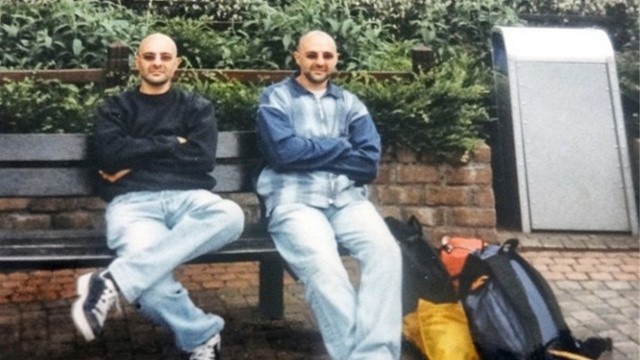
Deaf Belgian brothers Marc and Eddy Verbessem underwent doctor assisted suicide at age 45 after they were told they were going to be blind as a result of a progressive eye disease called glaucoma.

Belgium legalized euthanasia in 2002 and the number of cases has risen every year since. In 2011, 1,133 were granted the right to die, of which 86 percent were at least 60 years old and 72 percent suffering from cancer.

What makes this case even more appalling to Christians who value the life that our Creator put in us, is that it was approved under the requirement of “unbearable pain.” The news that blindness would be the end-stage of their illness in the future was described as too much to bear.

The brothers enjoyed a cup of coffee together, and reportedly had a rich conversation right before they received the lethal injection. These are important details to note because they show that the brothers were not depressed, in fact they had fought to earn the right to die for much of the previous two years!

Where is the hope, the joy, the expectation of salvation that is associated with life? The one who came into this world to kill and destroy, the ancient serpent who initiated the fall of man has blinded them into believing that death is the answer. There is nothing more untrue than that.

The life we have been given is not our own, and born-again Christians understand this fundamental truth. Our life and even our bodies are not our own.

Paul tells us in 1 Corinthians 6:19-20 that “… your body is a temple of the Holy Spirit, who is in you, whom you have received from God. You are not your own.” What right do we have to kill our body?

Even our life is not our own. Again Paul tells us in 2 Corinthians 5:15 that “those who live should no longer live for themselves but for Him who died for them and was raised again.”

Romans 8 names the Holy Spirit as the Spirit of life.  And it is by the Holy Spirit that life is continually sustained:  “If it were [God’s] intention and he withdrew his spirit and breath, all humanity would perish together and mankind would return to the dust.” Job 34:14-15

These are just a few of the reasons why we believe that euthanasia is a sin against God.  He alone in His manifold wisdom and purpose can give and take life as He pleases.

These two brothers made a sane, calculated decision in their actions.

By taking their life into their own hands they made themselves the gods of their life, and they sacrificed their life unto themselves, like the Canaanites sacrificed their own to Molech.  This was their final deed… their final idolatrous act of self-worship.

We know that death by suicide or euthanasia is not the answer when difficulties arise in this fallen world.  Jesus is the ultimate solution because only He can restore hope in affliction and eternal life after our passing.

image: lifesitenews.com

Digging for Oil in the Mesopotamian: Update from Narcis Popovici (1)

featuredimage

Many of the readers of this blog know how Narcis Popovici, a Romanian-American from Chicago answered the call of the Lord and moved to a country hostile to Christians in order to extend the Kingdom of God there.  Along with his wife and children, and another family they have left EVERYTHING behind without plans to return to the United States.  I have personally received permission to publish this message and use his name, while maintaining the other names and their location private due to security reasons.  It is an honor to be able to support Narcis and his team in this endeavor.

Dedicate this year to God

     Like many of you, we felt it right to consecrate the first part of this year for seeking the Lord’s face with fasting and prayer.  I can’t emphasize how beneficial seasons of fasting have been to our family.  We don’t feel like this is some kind of feat of Christian strength, more like a natural expression of recognized weakness without His moment by moment Spirit quickening in our lives.  A fresh re-prioritizing of the primary place of His nourishing word and breath in our lives.  The more we begin to taste of His world, the less of a pull our world will have upon us. 

Whether that  be the spirit of this age, pride, fear, discouragement, or a thousand other God-hostile forces of flesh and darkness.  Our prayer to God is for “the word of His mouth” for this year, and the grace and faithfulness necessary to walk it out, both for us and for you.  For His abundant “presence” in our lives to be the chief center of all we are, and the “anointing” of His Spirit to break every demon yoke seeking the distortion of His glory and destruction of His creation. 

The most precious natural resources in our world are usually hidden, in the soil of the earth, underwater or buried deep in mountains.  But those who will bore them out find great reward.  God often reveals aspects of Himself and His Kingdom in nature and we believe this is one of them, those who dig will find!  Please click the video link on the left, just under our family picture for a short video on what we believe concerning the lay of the land and a word of encouragement from the Lord.     
 
Phase One: In Motion
     This first month has been a wild one.  I wish the angels would do some of this practical stuff for us, but in the meantime you gotta do what you gotta do :-). If you were wondering, YES, things here run a lot slower and disorganized than they do in the west.  So here’s the good news, a month and a half in and we are; about fully furnished and settled here in our home.  Just purchased a large SUV to cart around the team and some of you who will be visiting (prophesying). 

Officially got our residency, 7 months approved because it was our first time and that should be extended by 1 year increments once it expires.  We will be starting language classes this week and have had the opportunity of seeing God heal and deliver on a couple of different occasions during this last month.  We are still seeking the Lord for a location for our base and working towards establishing relationships with some here locally that might partner with us in the work at hand.  […] and I might start doing some traveling perhaps in the spring, we are seeking the Lord for His continued leadership on all we do.   

Family Life
     We hope that your Christmas was blessed and that you were able to celebrate our Lords birth with family and friends.  Our Christmas was blessed, despite not being with so many of our family and friends back home.  We also celebrated […] 8th birthday just a couple of days ago!  Family is so important!  One of the things God has consistently emphasized in our lives and ministry is the value of family.  God is a family man, and spirituality must look like the divine presence, word and order of God worked into our everyday family life. 

If we haven’t connected with you in a while, please forgive us.  With so much going on, we’re trying our best to give attention to the needs at hand.  However, as time permits, you can connect with us via Skype, facetime, phone, Facebook or email.  We’d love to hear from you.  Thank you for your continued prayers and support, we are indebted to your love and faithfulness to God and to us!

With Love