At Christmas We Remember God’s Eternal Plan

image

The most profound, the most mysterious, the most wonderful plan ever conceived has to do with God’s intra-Trinitarian counsel to create and redeem humanity. The incarnation, death and resurrection of God Himself into the person of Jesus to save believers onto His glory is the center of this plan.

This mystery of human redemption is so great that under the guidance of the Holy Spirit apostle Peter writes in 1 Peter 1:12 that even angels “long to look” into this matter. These majestic, pure, and unfallen beings who live in the presence of God, long to observe the unraveling of this mystery, that is God’s redemptive plan for us.

Imagine the greatest movie ever produced, one that took many years to complete, the one with perfect ratings across the board, the one which everyone in the country awaits to see… That anticipation pales in comparison with the anticipation that heavenly creatures have in observing God’s redemption of humanity. That is why we, the subjects of this great salvation, must always keep in mind this eternal plan, especially when we celebrate Christ’s incarnation.

Before this world was corrupted by sin, before Satan and his angels fell, before the foundations of creation were laid, and before time became a dimension… in the greatest mystery ever conceived, God installed this plan of creation and redemption for His Glory. He knew that His beloved creation will fall and will need to be redeemed. In His omniscience, God foresaw this as revealed to the prophet Isaiah:

“The Lord saw it, and it displeased him that there was no justice. He saw that there was no man, and wondered that there was no one to intercede; then his own arm brought him salvation, and his righteousness upheld him.” (Isaiah 59:15-16)

It is a special treat for believers to get a glimpse into God’s counsel as we observe past tense language used in this verse for a future event! Past, present, future… these are human considerations… God is not bound by time, therefore His counsel stands eternal.

Consider what Paul writes:

“7 In him we have redemption through his blood, the forgiveness of our trespasses, according to the riches of his grace, 8 which he lavished upon us, in all wisdom and insight 9 making known to us the mystery of his will, according to his purpose, which he set forth in Christ 10 as a plan for the fullness of time, to unite all things in him, things in heaven and things on earth.

11 In him we have obtained an inheritance, having been predestined according to the purpose of him who works all things according to the counsel of his will, 12 so that we who were the first to hope in Christ might be to the praise of his glory.” (Ephesians 1:7-12)

As the born-again believer is faced with this realization, he or she is overcome by an awesome desire to worship the Redeemer, to give Him the all glory, to thank Him and to serve Him.

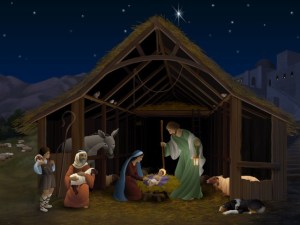
Let us remember God’s mysterious and eternal plan for us as we celebrate His incarnation this Christmas.

The Triune God Revealed in the Old Testament (part 2)

continued from here

The book of Isaiah is considered by many to be the “Gospel” of the Old Testament (OT) because it portrays Jesus in His Messianic role as the servant send by God the Father under the anointing of the Holy Spirit.  Isaiah 61:1-2 has strong trinitarian implications because it distinguishes the three persons of the Godhead and it shows their participation in the work of salvation of mankind:

“The Spirit of the Lord GOD is upon me, because the LORD has anointed me to bring good news to the poor; he has sent me to bind up the brokenhearted, to proclaim liberty to the captives, and the opening of the prison to those who are bound; to proclaim the year of the LORD’s favor, and the day of vengeance of our God; to comfort all who mourn;”

The narrative here is spoken by Jesus, under the anointing of the Holy Spirit, and the opening of the passage “The Spirit of the Lord God is upon me” encapsulates the Trinity.  The Hebrew word ruah is used to designate the Holy Spirit in the OT and it is used in this passage.  The words Lord God (Adonai and YHWY) represent God the Father, while the person speaking in this passage is Jesus, the messianic servant sent by the Father to accomplish the tasks listed in verses 1-3.

The fact that Jesus is the narrator cannot be contested due to the evidence found in Luke 4:16-30.  Jesus enters the Synagogue on Sabbath and reads aloud from the scroll the passage in Isaiah 61:1-2, and makes the astonishing claim:  “Today this Scripture has been fulfilled in your hearing.”  Jesus thus claims to be the Messiah, the narrator of Isaiah 61.

Therefore, Isaiah presents the Trinity – God the Father sending Jesus the Messiah, under the anointing of the Holy Spirit –  together doing the work of redemption.

Isaiah also pays special attention to the Holy Spirit and designates personal qualities to Him in Isaiah 63:10 “But they rebelled and grieved his Holy Spirit; therefore he turned to be their enemy, and himself fought against them.”  Besides the terrifying claim that God Himself became the enemy of Israel and He fought against them, this verse reveals two important things about the Holy Spirit (ruah).

First, the Holy Spirit is a distinct entity (his Holy Spirit) from God the Father (LORD YHWH), and second, the Holy Spirit can be grieved, a personal and emotional quality.  We now have a clear presentation of two out of three persons in the Trinity, God the Father and God the Holy Spirit in Isaiah 63:10.

A biblical demonstration of the divinity of Jesus and the Holy Spirit is beyond the scope of this article, but Isaiah 61:1-2 and 63:10 are clear in revealing the three separate persons of God: LORD YHWH the Father, Jesus the Messiah, and the Holy Spirit.

to be continued…

Which Person of the Trinity Should We Pray to?

Christian believers are required to have a continuous life of prayer, and we pray to God and address Him as Lord in our prayer.  If we are to understand the way God is revealed in Scripture, we must realize that God is revealed in three persons, the Father, the Son and the Holy Spirit, each being fully God and all three one God.

A logical question then follows, does it matter which person of the Godhead we pray to?  Or should we mainly pray to God as Lord?

Pastor and theologian John Piper answer as follows:  “the pattern that you find almost uniformly – I say almost uniformly – throughout the New Testament is to pray to the Father in the name of the Son by the power of the Holy Spirit.”  Reformed believers pray almost exclusively to the Father because the other persons of the Trinity facilitate our access to the Father.  The Holy Spirit glorifies the Son, and the Son, thru His sacrifice brings us to the Father.  Jesus also prays to the Father and this serves as the ultimate example for us.

But I also believe it is biblical to pray to Jesus and to the Holy Spirit.  Consider the following verses about praying to Jesus:

John 14:13-14 “Whatever you ask in my name, this I will do… If you ask me anything in my name, I will do it.”

1 Cor 1:2 “in every place call upon the name of our Lord Jesus Christ”

1 Tim 1:12 “I thank him who has given me strength, Christ Jesus our Lord…”

With respect to the Holy Spirit, we must understand that the Holy Spirit facilitates our worship and prayer.  He points to the Son as the only way to the Father.  But since the Holy Spirit is fully God, we may address the Holy Spirit directly in prayer, for example: “come, Holy Spirit.”

Prayer is essentially communication, and when we have fellowship with someone, we communicate with that person.  Paul tells us in 2 Cor 13:14 that we partake in “the fellowship of the Holy Spirit.”  Therefore it is not wrong to communicate in prayer with the Holy Spirit.

Piper, concludes: “So my bottom line answer – and I’ve been asked this a lot – is to follow in general the pattern of the Bible, namely, pray to the Father in the name of Jesus by the power of the Spirit, that is, in reliance upon the help of the Spirit.”

Read more at http://www.christianpost.com/news/does-it-matter-which-person-of-the-trinity-we-pray-to-84697/#XryEmI7Sd0EpxOXq.99

The Triune God Revealed in the Old Testament (part 1)

Other than the teaching of salvation by grace thru faith, the doctrine of the Trinity may be the most important doctrine of the Christian faith.  Some theologians would say that it is the primordial doctrine of Christianity.  Wayne Grudem defines it in his Systematic Theology as follows:  “God eternally exists as three persons, Father, Son, and Holy Spirit, and each person is fully God, and there is one God.”

Well known passages in the Old Testament (OT) as well as obscure ones reveal the plurality of the Trinity.

Psalm 110:1 is the most frequently quoted passage from the OT in the New Testament (NT).  Here David receives a tremendous revelation from God to be able to write a glimpse of this amazing intra-Trinitarian conversation:  “The Lord says to my Lord:  “Sit at my right hand, until I make your enemies your footstool.”  Jesus challenges the Pharisees in Matthew 22:41-46 to understand that David is referring to two separate persons as “Lord” in Psalm 110.  God the Father says to God the Son, “sit at my right hand.”

David’s revelation continues when he writes in Psalm 45:7 “Therefore God, your God, has anointed you with the oil of gladness beyond your companions.”  Jesus is the anointed One by the Father when David again reveals the Father and the Son Jesus as God.

The Trinity is also revealed in a less known passage found in Hosea 1:7 “But I will have mercy on the house of Judah, and I will save them by the Lord their God.”  God (Elohim) here is speaking about the Lord (Yahweh) who will save Judah.  The Scripture clearly indicates here that two separate persons can be called God and Lord, that is Father and Son.

In the context of God’s plan of redemption, Isaiah 48:16 has amazing trinitarian implications: “And now the Lord God has sent me, and his Spirit.”  In NT perspective Jesus is the Messiah the One send by the Father.  It follows that in the redemption context of Isaiah 48, the person “me” in verse 16 send by God is Jesus.  If this verse is spoken by Jesus, and I believe it is given its context, we now have all three persons of the Trinity, the Father, the Son Jesus, and the Holy Spirit mentioned in this verse.   Amazing!

The doctrine of the Trinity is a blessing for us because by understanding it we understand God’s plan of redemption and how each person of the Trinity is involved in each aspect of salvation.  We will never grasp how God can co-exist in three persons and be One God, but if we are to believe the Bible, we must accept this doctrine.  CS Lewis attested its validity when he said that such a doctrine could never be made up by a human mind.  No one could have come up with this type of idea if it wasn’t for the revelation given in the Bible.

to be continued…